
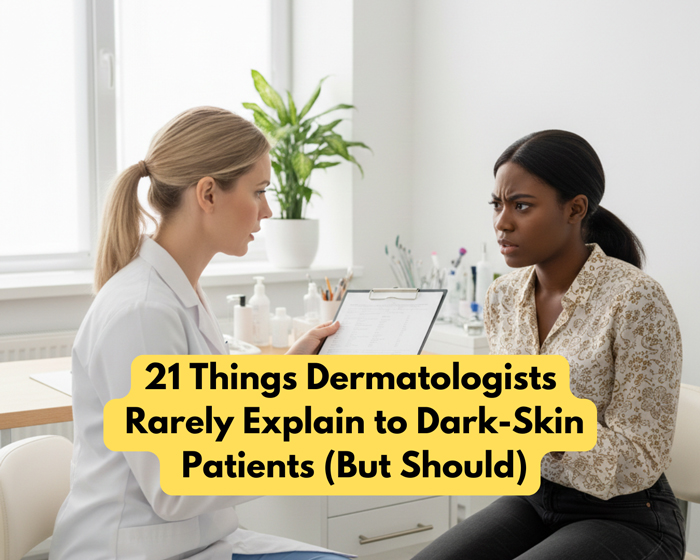
21 Things Dermatologists Rarely Explain to Dark-Skin Patients (But Should)

"Why do many dermatology visits feel rushed and never fully address Black skin needs?"

Dermatologist examining dark skin patient

Yelling Ant's TL;DR - Many clinics are trained on lighter skin first. That gap leaves Black patients under-informed about melanin behavior, scarring risk, pigment changes, and barrier care. Knowing these truths helps you protect your skin and ask better questions.

Dermatology should not feel confusing. Black skin behaves differently because melanin reacts differently to inflammation, trauma, and sun exposure. When doctors skip these details, patients suffer quietly. Here are the things you deserve to know.

1. Melanin protects but does not block sun damage.
Melanin offers partial protection. It does not prevent UV DAMAGE. Sunscreen is still required.

2. Dark skin scars easier.
This is called POST-INFLAMMATORY HYPERPIGMENTATION (PIH). Even small pimples can leave marks. Gentle care matters.

3. Chemical peels need lower strength.
High acid levels raise burn risk. Controlled treatments protect pigment stability.

4. Laser settings must be adjusted.
Wrong settings cause burns. THERMAL INJURY happens faster in melanin-rich skin.

Learn the rules they forgot to teach at YellingAnt.com and protect your glow with knowledge.

5. Barrier damage shows up as dullness first.
It is not always redness. Flat tone signals weakness. Repair restores glow.

6. Keloids are more common in Black skin.
They form from excess collagen. Early treatment helps control growth.

7. Acne medication can trigger pigmentation.
Some actives cause irritation. Irritation creates dark marks. Balance is key.

8. Hairline acne often comes from products.
This is POMADE ACNE. Oils clog pores near edges. Clean regularly.

9. Dark circles are not always sleep related.
Genetics and circulation matter. Sometimes iron levels play a role.

Love Your Brown Skin® by choosing melanin-safe care at BeautyOfTheNile.com and stop guessing.

10. Hot tools affect facial skin too.
Heat increases inflammation. This worsens pigment issues. Protection matters.

11. Over-exfoliation thins protection.
Thin skin reacts faster. Slow routines work better long-term.

12. Sweat can cause chest acne.
Salt and bacteria clog pores. Shower soon after workouts.

13. Neck discoloration can signal insulin issues.
This is ACANTHOSIS NIGRICANS. Medical testing may be needed.

14. Makeup removal is skincare.
Sleeping in makeup traps bacteria. It slows repair. Clean nightly.

15. Stress affects oil production.
Cortisol raises sebum. More oil means more breakouts.

16. Vitamin C needs proper formulation.
Wrong pH irritates skin. Stable formulas brighten safely.

17. Eye skin shows damage first.
It is thinner. Actives travel faster. Use gentle products.

18. Fragrance increases sensitivity risk.
It triggers inflammation. Inflammation disrupts pigment balance.

19. Hydration changes pore appearance.
Plump skin reflects light better. Dehydration exaggerates texture.

20. Diet impacts inflammation levels.
High sugar raises breakouts. Balanced nutrition supports healing.

21. Prevention saves more than treatment.
Daily protection costs less. Long-term repair is harder.

Final Word Black skin is not complicated. It is just different. When doctors skip melanin education, patients pay the price. You deserve full information, not shortcuts. Your glow deserves respect.

Our skin carries culture, history, and pride. Build smarter routines with community in the “Love Your Brown Skin” Colony at https://YellingAnt.com.